Saturday, October 4, 2014

Binaca Geet Mala - 1953 Finals!!!

These are the songs which have been listed in 1953... Listen and Enjoy !!!


SongYearFilmDirectorLyricsSinger
KAAHE JAADU KIYA1953NAGMANaushadJ NAKHSHABSHAMSHAAD BEGUM
AA MOHABBAT KI BASTI1953FAREBANIL BISWAASMajroohLATA , KISHORE
KAARE BADRA TU NA JA1953SHIKASTSHANKAR JAYKISHANSHAILENDRALATA
DHARTI KAHE PUKAR KE1953DO BIGHA JAMEENSALIL CHAUDHARYSHAILENDRAMANNADE , LATA , SAATHI
BAHARE BECH DAALI1953JHAANJHARC RAMCHANDRARAJENDRA KRISHNALATA
AAJA RE AB MERA DIL PUKAARA1953AAHSHANKAR JAYKISHANHASRATMUKESH , LATA
ZINDAGI DENE WAALE SUN TERI DUNIYA SE DIL BHAR GAY1953DIL-E-NADAANGULAM MOHAMMADSHAKEEL BADAYUNITALAT
YAAD KIYA DIL NE1953PATITASHANKAR JAYKISHANHASRATLATA , HEMANT KUMAR
E GHAME GIL KYA HARU1953THOKARSARDAR MALIKMAZAAZ , BALWANT TANDONTALAT , ASHA
MOHABBAT KI DAASTAN AAJ SUNO1953MAYURPANKHSHANKAR JAYKISHANHASRATLATA
SHAANME GHAM KI KASAM1953FOOTPATHKHAYYAMMajrooh , SARDAR JAFFRITALAT
YE ZINDAGI USSI KI HAI1953ANAARKALIC RAMCHANDRARAJENDRA KRISHNALATA

Thursday, September 25, 2014

Binaca Geet Mala - Top ranked songs of all the years with Videos

What the hell is this Binaca Geel Mala? The first question that raised in your mind after reading the title of this post. Actually people of our generation do not know much about this one of the most popular radio shows of its times. Yeah I am right. Binaca Geetmala was a popular weekly radio countdown show of top filmy songs from Indian cinema listened to by millions of Hindi music lovers, that was broadcast on Radio Ceylon from 1953 to 1993.

It is considered as the first radio countdown show of Indian film songs, and has been quoted as being the most popular radio program in India during the its broadcast. The show was hosted by Ameen Sayani. The program used to start with the most famous quotes "Bhaiyo aur Bahano..... Amin Sayani ka Namaskar!!!". He was the most popular radio anchor in India. Sayani ran the programme to record-smashing success for nearly 45 years, earning a place among the world’s top broadcasters. He was the man with the gravelly voice and stylized drawl, through this show became a household name in India.

Mr. Amin Sayani said “For all of Rs. 25, I was required to select the songs, produce, script and compare the programme, and also sort the mail. The programme involved a competition and we expected 40-50 letters. The first episode brought 9,000. Within a year, that number touched 60,000. We had to shelve the competition and introduce a countdown show.”

Lists of top songs per year :-

Year Song Film Music Director Lyricist Singer(s)
1953 Ye Zindagi Usi ki Hai Anarkali (film) C. Ramachandra Rajendra Kishen Lata Mangeshkar
1954 Jayen To Jayen Kahan Taxi Driver Sachin Dev Burman Sahir Ludhianvi Lata Mangeshkar/Talat Mahmood
1955 Mera Joota Hai Japani Shri 420 Shankar Jaikishan Shailendra Mukesh
1956 Ae Dil Hai Mushkil Jeena Yaha CID O. P. Nayyar Majrooh Sultanpuri Mohd. Rafi, Geeta Dutt
1957 Zara Saamne Toh Aao Chhaliye Janam Janam Ke Phere S. N. Tripathi Bharat Vyas Mohd. Rafi, Lata Mangeshkar
1958 Hai Apna Dil Toh Awara Solva Saal S. D. Burman Majrooh Sultanpuri Hemant Kumar
1959 Haal Kaisa Hai Janaab Ka Chalti Ka Naam Gaadi S D Burman Majrooh Sultanpuri Kishore Kumar, Asha Bhosle
1960 Zindagi Bhar Nai Bhoolegi Wo Barsaat Ki Raat Barsaat Ki Raat Roshan Sahir Ludhianvi Mohd. Rafi, Lata Mangeshkar
1961 Teri Pyaari Pyaari Surat Ko Sasural Shankar Jaikishan Hasrat Jaipuri Mohd. Rafi
1962 Ehsaan Tera Hoga Mujh Par Junglee Shankar Jaikishan Hasrat Jaipuri Mohd. Rafi, Lata Mangeshkar
1963 Jo Wada Kiya Woh Nibhana Taj Mahal Roshan Sahir Ludhianvi Mohd. Rafi, Lata Mangeshkar
1964 Mere Man ki Ganga aur tere man ki Jamuna ka Sangam Shankar Jaikishan Shailendra Mukesh, Vyjayanthimala
1965 Jis dil mein basa tha pyaar tera Saheli Kalyanji Anandji Indeevar Mukesh, Lata Mangeshkar
1966 Baharon phool barsao mera mehboob aaya hai Suraj Shankar Jaikishan Hasrat Jaipuri Mohd. Rafi
1967 Saawan ka mahina pawan kare sor Milan Laxmikant-Pyarelal Anand Bakshi Mukesh, Lata Mangeshkar
1968 Dil wil pyar vyar main kya jaanu re Shagird Laxmikant-Pyarelal Majrooh Sultanpuri Lata Mangeshkar
1969 Kaise rahoon chup ki meine pee hi kya hai Inteqam Laxmikant-Pyarelal Rajendra Krishna Lata Mangeshkar
1970 Bindiya chamkegi choodi khankegi Do Raaste Laxmikant-Pyarelal Anand Bakshi Lata Mangeshkar
1971 Zindagi ek safar hai suhana Andaaz Shankar Jaikishan Hasrat Jaipuri Kishore Kumar, Asha Bhosle
1972 Dum Maro Dum Hare Raama Hare Krishna R. D. Burman Anand Bakshi Asha Bhosle, Usha Iyer
1973 Yaari hai imaan mera yaar meri zindagi Zanjeer Kalyanji Anandji Gulshan Bawra Manna Dey
1974 Mera jeewan koraa kaagaz koraa hi rah gaya Kora Kagaz Kalyanji Anandji M. G. Hashmat Kishore Kumar
1975 Baaki kuchh bacha to mahangaai maar gayee Roti Kapada Aur Makaan Laxmikant-Pyarelal Varma Malik Lata Mangeshkar, Mukesh, Jaani Babu Qawwal, Narendra
1976 Kabhi kabhi mere dil mein khayaal aataa hai Kabhi Kabhi Khayyam Sahir Ludhianvi Lata Mangeshkar, Mukesh
1977 Husn haazir hai mohabbat ki sazaa paane ko Lailaa Majnu Madan Mohan Sahir Ludhianvi Lata Mangeshkar
1978 Ankhiyon ke jharokhon se, mainen dekha jo Ankhiyon Ke Jharokhon Se Ravindra Jain Ravindra Jain Hemlata
1979 Khaike Paan Banaras Wala Don Kalyanji Anandji Anjaan Kishore Kumar
1980 Dafli Wale Dafli Baja Sargam Laxmikant-Pyarelal Anand Bakshi Lata Mangeshkar, Mohd. Rafi
1981 Mere Angane Mein Laawaris Kalyanji Anandji Anjaan Amitabh Bachchan, Alka Yagnik
1982 Angrezi Mein Kehte Hain Khuddar Rajesh Roshan Majrooh Sultanpuri Kishore Kumar, Lata Mangeshkar
1983 Shayad Meri Shaadi Souten Usha Khanna Saawan Kumar Kishore Kumar, Lata Mangeshkar
1984 Tu Mera Hero Hai Hero Laxmikant-Pyarelal Anand Bakshi Anuradha Paudwal, Manhar Udhas
1985 Sun Sahiba Sun Ram Teri Ganga Maili Ravindra Jain Ravindra Jain Lata Mangeshkar
1986 Yashoda Ka Nandlala Sanjog Laxmikant-Pyarelal Anjaan Lata Mangeshkar
1987 Chitthi Aayi Hai Naam Laxmikant-Pyarelal Anand Bakshi Pankaj Udhas
1988 Papa Kehte Hain Qayamat Se Qayamat Tak Anand-Milind Majrooh Sultanpuri Udit Narayan
1989 My Name Is Lakhan Ram Lakhan Laxmikant-Pyarelal Anand Bakshi Mohd. Aziz
1990 Gori Hai Kalaiyaan Aaj Ka Arjun Bappi Lahiri Anjaan Lata Mangeshkar, Shabbir Kumar
1991 Dekha Hai Pehli Baar Saajan Nadeem-Shravan Sameer Alka Yagnik, S P Balasubramaniam
1992 Maine Pyar Tumhi Se Phool Aur Kaante Nadeem-Shravan Sameer Kumar Sanu, Anuradha Paudwal
1993 Choli Ke Peechhe Khalnayak Laxmikant-Pyarelal Anand Bakshi Alka Yagnik, Ila Arun
1994 Didi Tera Dewar Deewana Hum Aapke Hain Kaun Raam-Laxman Dev Kohli,Ravinder Rawal Lata Mangeshkar
1995 Tujhe Dekha To Ye Jana Sanam Dilwale Dulhania Le Jayenge Jatin-Lalit Anand Bakshi Lata Mangeshkar,Kumar Sanu

Here are the Youtube links for all the yearly top rated songs... you can watch these songs.


1953: Ye Jindagi Usi Ki Hai


Thursday, January 24, 2013

Anand - 1971

Maut tu ek kavita hai....
Mujhse ek kavita ka vadaa hai, milegi mujhko ...

Doobti nabzon mein jab dard ko neend aane lage
Zard sa chehra liye chaand ufaq tak pahunche ...
Din abhi paani mein ho, raat kinare ke kareeb
Na andhera ho, na ujala ho ...
Na aadhi raat, na din
Jism jab khatm ho aur rooh ko saans aaye ...

Mujhse ek kavita ka vadaa hai milegi mujhko....
Written by Gulzar and uttered by Amitabh Bachchan in Famous Rajesh Khanna starrer Anand (1971), yet another movie directed by Hrishikesh Mukharjee on this Blog. :)
Winner of 6 'Filmfare' Awards in 1972: Best Movie, Best Actor -- Rajesh Khanna, Best Supporting Actor -- Amitabh Bachchan, Best Story -- Hrishijesh Mukherjee, Best Editing -- Hrishijesh Mukherjee and Best Dialogues -- Gulzar.
It also won the National Award for Best Regional Film (Hindi).

Cast : Rajesh Khanna, Amitabh Bachchan, Sumita Sanyal, Ramesh Deo, Seema Deo, Lalita Pawar
Directed By :- Hrishikesh Mukharjee
Written By :- Hrishikesh Mukharjee, Gulzar, Bimal Datta, D. N. Mukharjee
Music By :- Salil Chaudhary

As the movie starts, we sees Dr. Bhaskar (Amitabh Bachchan) receiving the honorary award in literature 'Saraswati Puraskar' for his novel Anand. When asked to brief about the inspiration of the story, Bhaskar says this novel is nothing but his daily diary. As Bhaskar shares his experiences, in the start only we are introduced to the incurable illness (Cancer - lymphosarcoma of the intestine) of the hero Anand Saigal (Rajesh Khanna) and that he is left with only 4/6 months of his life. Doctor Prakash Kulkarni (Ramesh Deo) discuss the case of Anand Saigal with Doctor Bhaskar. Hrishida had told Gulzar to write a start such that audience comes to know at beginning only about the illness of the hero as he wanted the emphasize on the essences of the movie, how Anand lives his remaining life to its fullest. He comes to Bombay for a treatment to doctor Prakash and also meet doctor Bhaskar.
Dr. Prakash is a a doctor who was far from idealistic, and cashed in on hypochondriacs and patient's anxieties to buffer his pockets. And he uses this money to treat poor patients free of charge.
Anand walks into Dr Bannerjee's life just when he is about to sink into cynicism. Bhaskar is a no nonsense character who treats his patients with utmost seriousness and treats his life also in a similar way. A sober doctor like him gets upset with life seeing the dark reality of his nation.

Dr. Prakash admits him in his hospital. Anand sees Metron D'sa (Lalita Pawar) there and get scared of her strict disciplines. He runs away from the hospital and goes to Bhaskar's residence and requests him if he can stay with Bhaskar. Bhaskar allows so. He calls Bhaskar as Babu Moshaii. Bhaskar is a character living with utmost seriousness while Anand wants to spread only happiness everywhere.
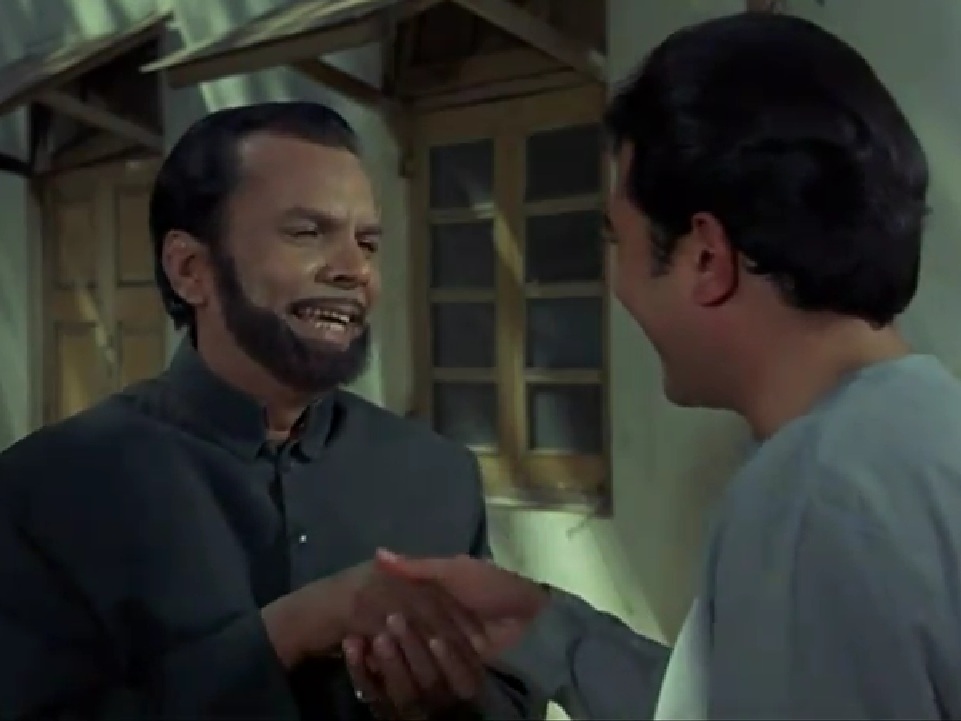
Anand, who never stops talking is always in search of a friend, Murarilal. He calls any unknown person on the street by the name as Murarilal and tries to make friendship. One day he finds his Murarilal as he meets with Isa Bhai (Johnny Walker) a Muslim Stage Actor.

Anand is preceded by a letter from a Delhi physician describing his terminal illness—a rare form of stomach cancer. Realizing that he has no treatment to offer, Bhaskar is initially re pelled and even angered by Anand’s bouncy entrance—and here the film briefly but effectively explores the psychology of the physician, when Anand thoughtfully responds to an outburst by Bhaskar (who is appalled that he isn’t taking his illness “seriously”): “Ah, I understand, you aren’t angry at me, you’re angry at yourself, because you can’t help me.”

Anand sees the seriousness of bhaskar and has a conversation with Ramu Chacha about it and he discovers that Bhaskar is in love with a school teacher renu whom he had treated for pneumonia. Anand goes to meet Renu 's Mother (Durga Khote). Seeing few Mawali's near renu's house, he consult a Wrestler (Dara Singh) and set it clear for Renu.

He even engineers their first date and strangely accompanies them. Feeling bit odd due to Anand's presence two love birds sit quietly and rather starts discussing weather. Anand being a chatter box breaks the silence and talks on their part.

Anand tries to steal every joyous moment from life, as he shows himself in front of every other person, but he carries his own grief in depth of his heart, may it be about his lost love or about the life that he is loosing away. When Renu finds out about this through the record, he hides it even from her.
With Anand's increasing death symptoms, sooner everyone starts pleading God, hoping for a miracle be it Matron D'sa, Ramu Chacha, his sister Suman and even a Murarilal, Isa Bhai. But as Bhaskar finally concedes, “God needs good people as much as we do….” And so, with none-too-subtle symbolism (a tape running out, a bunch of balloons floating skyward), Anand Sehgal dies.
And Bhaskar writes Anand mara nahi, Anand marte nahi.
Rajesh Khanna as Anand is absolutely brilliant, this is his career-best performance, he bagged the Filmfare (1 out of 3) for this. He makes you laugh and cry. He causes anxiety and goose bumps.‘Anand’ was everything a human being should be - idealistic, happy-go-lucky and bringing a cheer, smile or guffaw to the faces and hearts of everyone he encountered. Rajesh Khanna delivered a stunning performance in the role of a man who smiled and laughed in the face of Death, and surrendered to it cheerfully,
leaving behind an indelible impression on his friends. 'Anand’ remains the epitome of everything that is beautiful, warm, compassionate and joyous in life. He is no fictional character, but a gem of a human being we all knew for a very short, delightful two hours and whose memory will always remain in a select corner of our being.

Amitabh Bachchan as a supporting actor is no less to mention. He is fantastic as a Bengali doctor, babumoshai. His gaunt, towering, embittered persona softened only when in the company of his dying friend. He beautifully rendered the pain and frustration of a doctor who knew only too well that his science could do nothing to save a man who, within a few days, had grown to be an inseparable part of his life. Anand launched Amitabh Bachchan on the path to superstardom.

The supporting cast was effective and strong, be it real life couple Ramesh Deo and Seema Deo, Laita Pawar as Mrs. D'sa, Johny Walker as Murarilal, Sumita Sanyal as Renu, Durga Khote as Renu's mother or even Ramu Chacha. Everyone gave excellent performance in their roles.

Salute to the Director!! Hrishikesh Mukherjee once said in an interview that every director begins to stale creatively after 10 or 15 films. ‘Anand’ gave a lie to his own statement, at least as applied to himself - as he had made over a dozen films before this. Undoubtedly, his best-ever film (the only one that comes close is ‘Anupama’), ‘Anand’ was a huge commercial success and also picked up awards galore, both at the National and popular level.

Teesari Kasam - 1967

Yet another movie on this blog, directed by Basu Bhattacharya. Teesri Kasam was the only film produced by the lyricist Shailendra.
It won the golden Lotus Award for being 'Best Film' in 1967 at National Film Awards.
Shailendra won the only Filmfare of Best Lyricist for 'Sajan re jhooth mat bolo'.
This film was also nominated in Moscow International Film festival for 'Grand Pix'.
Nabendu Ghosh, the screen play writer got Best screenplay award from BFJA.

Teesari Kasam
Cast :- Raj Kapoor, Waheeda Rehman, Iftekhar, Asit Sen, Dulari, Keshto Mukherjee, C.S. Dubey
Directed By :- Basu Bhattacharya
Produced By :- Shailendra
Written By :- Nabendu Ghosh (Screenplay)and Phanishwar Nath Renu (Story & Dialogue)
Music By :- Shankar-Jaikishen
The film was based on a story by revolutionary novelist Phanishwar nath Renu, 'Maare gaye Gulfam'. He was the voice of the contemporary rural India and among the pioneers to bring regional voices into the mainstream Hindi literature.
Since the film was far away than the regular Hindi melodrama, its more lyrical, heart touching, practical and with an unexpected heart aching end.

As the movie starts we are introduced to protagonist Hiraman who is a bullock cart driver form a small village who gets caught transporting illegal goods. Somehow he manages to escape from scene avoiding imprisonment and takes his first Kasam, vow "Not to transport Illegal goods". After that he takes another job of transporting bamboos which leads to unfortunate accident with another cart. After getting badly beaten by other cart driver, Hiraman takes his second Kasam, vow "Not to transport Bamboos".


He buys a new cart from his savings to transport passengers. One night a stranger approaches Hiraman and ask to transport his Samaan to another 30km away village. Hiraman agrees and what he sees of this Samaan is a leg of female. Thinking that he should not be in any trouble, he stops on the way to a temple and prays to god. He gets amused when get a glimpse of his passenger sleeping quitely.
The woman, Heerabai gets friendly with Heeraman and calls him her Meeta as they share the same name. She is a dancer with The Great Bharat Nautanky Company who holds dance sequels in village fairs, and she is headed to it. As they travel together, heerabai gets charmed the simplicity of Heeraman and his singing, whereas heeraman considers her to be a educated, well mannered and a bashful virgin from a respectable family. All through the course of their journey, he shields her from the prying eyes of strange men on the road. Hirabai who is really a bazaru aurat who keeps men entertained through the nights with her nautankis, is enchanted by Hiraman’s naivete and entranced by the songs he sings. As the journey continues, both get dragged to each other. After three days they arrive at the Nautanky Company and the reality shatters their idyllic world.

Hirabai coaxes Hiraman to spend a few days at the fair and see her dance. She is kind enough to arrange free passes for him and his friends. Heeraman accepts this happily as he will get to see her beautiful performances and will also get to spend some more time with her. The image that Heeraman has of Hirabai - is that of a Devi. Attending the drama shatters him as people looks at her, even his friend leers at her. He fights with one drunkard who passes a comment on Hirabai. Hirabai angrily asks him what right does he have to fight on her behalf. Hurt, Hiraman stays away from the show. Hirabai calls him to her tent and apologises to him. Hiraman asks her to leave this profession where people talk ill of her. His concern touches Hirabai's heart as she realizes he looks upon her just as is she were a respectable woman.

Being helpless in her own situation, Hirabai refuses the Zamindaar who request her to stay after the Nautanki to spend some time with him Alone. The zamindar tries to force himself on her but she fights him off. Hirabai decides to leave the Nautanki company for her presence will threaten the livelihood of others in the troupe as the zaminndar will not leave them alone unless she gives in to him.

But she cannot live a lie with Hiraman. She knows very well that for Heeraman she is Heeradevi - Devi - a form of all good virtues. She doesnt want to be pretentious to him.

She decides to leave the company and sends for him to say goodbye. At the train station she tells him she is going back to her old company. She tells a hurt Hiraman that like Mahua she already has been sold. As she departs and Hiraman returns to his cart he takes a third vow never to carry a woman from a Nautanki Company again.


There are many strengths of the movie which got it the Golden Lotus :).
The uncluttered story which revolves around the main characters of Heeraman and Heerabai. The story has a sensitive lyrical quality with very well portrayed conversations between these two people.

Raj Kapoor though seems too old to make a hero, after seeing the movie you wont deny the power in his performance without any polished manner or the chaplinesque like in his other movies.

Waheeda with her dancing skills fits perfect in role of Heerabai.
And Ofcourse the songs by Shankar-jaikishan...enhanced due to lyrics by this film's producer Shailendra and Hasrat Jaipuri. Mukesh has sung well as usual to reveal Raj Kapoors character in Sajjan re jhooth mat bolo, duniya bananewale... and also the wonderful paan khaye saiya hamaro by Asha.

This film was taken into the syllabus of NCERT Hindi 'Sparsh 2 ' Text book. The lesson was named 'Teesri Kasam ke Shilpkar Shailendra'.
From Prahlad Agarwal’s Teesri Kasam ke Shilpkaar Shailendra:
“Shailendra ne likha tha ki wah Raj Kapoor ke paas Teesri Kasam ki kahaani sunaane pahunche toh kahaani sunkar unhone bade utsaahpoorvak kaam karna sweekaar kar liya. Par turant gambhirtapoorvak bole, “Mera paarishramik advance dena hoga!” Shailendra ko aisi ummeed nahin thi ki Raj Kapoor zindagi-bhar ki dosti ka yeh badla denge. Shailendra ka murjhaaya hua chehra dekhkar Raj Kapoor ne muskuraate hue kaha, “Nikaalo ek rupaiya, mera paarishramik! Poora advance!”
Raj Kapoor accepted only that one rupee as his fees for this movie as it was produced by his friend Shailendra.

Watch Teesari Kasam Online

Wednesday, July 4, 2012

Filmfare Awards (Best Actors Category) Facts


The First Filmfare Award for Best Actor was bagged by Dilip Kumar in 1954 for Daag.

Dilip Kumar also shares the Most Awards record along with Amitabh Bachchan and Shahrukh Khan. They are awarded in the overall acting categories, with 8 awards each.
Dilip Kumar has won Filmfare Award for Best Actor 8 times for films like Daag, Devdas, Kaala Pani, Azaad, Naya Daur, Kohinoor, Leader and Ram aur Shyam.


Dilip Kumar also holds the record for most consecutive wins, having won the award for three years in a row from 1956 to 1958 for Azad, Devdas and Naya Daur.
Also an Oldest Nominee is Dilip Kumar, nominated at the age of 69.


Shahrukh Khan has won 8 Best Actor titles in Filmfare for Bazigar, Dilwale dulhaniya le jayenge, Dil to pagal hai, Kuch kuch hota hai, Devdas, Swades, Chuk de! India and now this year in 2011 for My name is Khan with which he has a tie with Dilip Kumar.


Amitabh Bachchan is the winner of 5 Best Actor awards and 3 Best Supporting Actor awards. Best Actor for movies like Amar Akbar Anthony, Don, Hum, Black and Paa.
While his wins as supporting actor are for Anand, Namak haram and Mohabatein.
Actor with Most Nominations Amitabh Bachchan Big B is nominated 27 times for the Best Actor Category. First time for Zanzeer in 1974 and recently he has won it for Paa in 2010.
Bachchan is the Most-nominated performer in any major acting category at Filmfare, with 36 nominations overall.

He also holds the record of being an Oldest Winner at the age of 67.

Amitabh Bachchan (in 1979) also shares the record of Actor with Most Nominations in the same year with Shahrukh Khan (in 2005) - 3 nominations.

Five actors have won the award in consecutive years; in chronological order, they are Rajesh Khanna (1971–72), Sanjeev Kumar (1976–77), Amitabh Bachchan (1978–79), Naseeruddin Shah (1981–82) and Shahrukh Khan (1998–99).


Actor with most nominations without ever winning - and this record is shared by Salman Khan and Ajay Devgan - 6 Nominations without ever winning.


Three actors have won the award for their debut performances:
Rishi Kapoor (for Bobby in 1973), He had a record of being an youngest winner at the age of 21 years for the same film.

Anupam Kher (for Saaransh in 1985) and

Hrithik Roshan (for Kaho Naa... Pyaar Hai in 2001).

Other actors who got nominated in this category for their debut performances are Sunny Deol (for Betaab in 1984) and Darsheel Safary (Taare Zameen Par 2008).

Darsheel Safary (for Taare Zameen Par in 2008), at the age of 11, became the youngest Best Actor nominee in the history of Filmfare.
He holds the record of Being the Youngest Filmfare Award winner by getting the Filmfare Critics Award for Best Actor category in the year 2008.


Two actors were nominated for both the Best Actor and Best Supporting Actor awards for the same performance: Ashok Kumar (for Aashirwad in 1970) and Kamal Haasan (for Saagar in 1986). In both occasions they won the Best Actor award.

Saturday, June 9, 2012

Mahal (1949)


After watching Madhumati, I got dragged towards Mahal, thinking that its another Ghost story.. But Noooo, Its a great Suspense Story.. Salute to the debutant Kamal Amrohi for creating a Gem which still shines among all the Great Hindi movies.

I wanted to post about this movie even though it doesn't have a single award in its merit list - and the only reason for that is - there were no awards given during that period... otherwise Madhubala as Best Actress, Kamal Amrohi as Best Director, and Lata as the Best Female Playback Singer for Ayega ayega aanewaala and Khemchand Prakash as Best Music director....and the Cameraman who has played an important role here carrying out the mystery from fear to the soft landing on materialistic ground.. these are the few I could write down easily.... I am sure there would have been many more nominations even in technical categories...

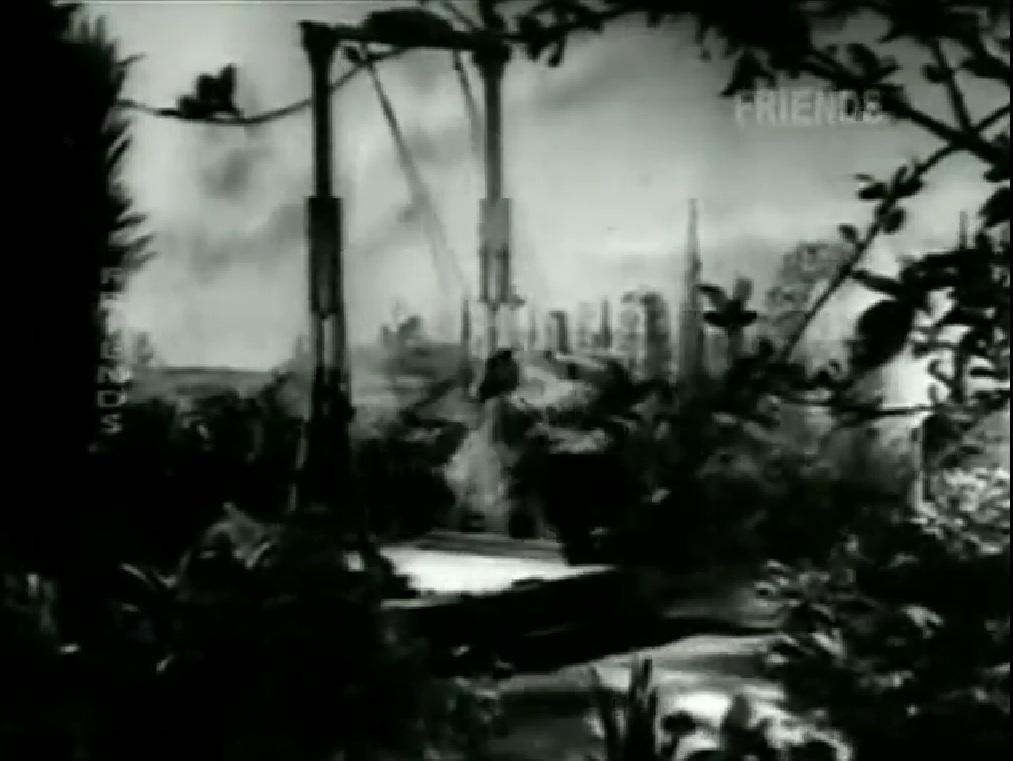
As our last post Madhumati, even Mahal starts on nothing but  a stormy night, with the description of the haunted mahal, Sangam Bhavan, located on banks of river Jamuna in Allahabad. The Hero, Hari Shankar (Ashok Kumar) comes to visit the newly bought mansion (haunted one) in Allahabad, all the way from Kanpur. He feels strange to see only the old age gardener - Mali Krishna - as a living being in the whole big house. He asks the mali to show around the mahal to him. Mali walks down with Shankar giving him the details of the mahal's history.
Mali tells him that 40 years ago this mahal was built for a beautiful lady, Kamini by her lover who used to come to meet her by crossing the river every midnight and used to return before sunrise. One stormy rainy night, his boat sinks in the river and he sends message with Jamuna's laharein that he will return again in another life time for her. Soon after Kamini herself gets drowned in the river waiting for her love. Shankar finds the story interesting but it doesn't disturb him much. He sends a message to his friend Srinath through mail about his arrival.

 After mali goes, he starts exploring his new mansion and finds an odd portrait of a man very much similar to his own looks.


Shankar is in aw of the image, he listens the clock striking 2, and he hears a lady singing. He follows the sound direction, but the lady - beautiful Madhubala - keeps on vanishing. The burn of his cigar tells him that he is not dreaming. Soon his friend (Kanu Roy) arrives.

Shankar tells him the story and the last scene, but Shrinath refuses to beilive him whereas Shankar is in trauma that he is reincarnation of the lover in portrait and he is here just to be with Kamini (Madhubala). Every where he keeps on seeing Kamini. He even has a small conversation with her when she tells him about her waiting for him.
 Every night 2 o'clock Shanker hears Kamini singing for her love - and that is he - and she always vanishes somewhere in the riverside terrace gazebo.

Shrinath tries to divert Shankar's attention by hiring two dancers - prostitute type. But in vain, again at 2 o'clock shankar comes back to Kamini, his love. 
On returning, She tells him that they both are those lovers, he is reincarnated but she is not as her death was a suicide. She asks him to get a body of a woman that he will like to see (she even suggest Mali's daughter Aasha), then she will kill her and will occupy her body, so her spirit will also be shant by getting a body and love back.
Next day Shrinath comes with Shankar's father and they take him to Kanpur. There his father tells him if he doesnt marry he can shoot his father. Shankar rather shoots at his own portrait indicating a suicide and agrees to marry Ranjana, his fiance'. 

He looks forward to start a new life with his bride but again the clock struck two at night he doesnt lift the Ghoonghat of his wife. He tries to run away from Kamini's memories.
He brings his unveiled wife in mountainous region, but all in vein. Ranjana is on despair about what's wrong with her and with her husband, whats troubling him so much..
The rest of the story happens in total filmi style but still worth to watch if you want to know the answers..
The story completes with lot of filmi turns, but it manages to keep you attached and interested in knowing further. I didnt find a moment which will make you get away from the film. Intense characters and their emotions - whatt a colorful play of shades!! Everyone is right at times and everyone is wrong at times.. though I will say, Ranjana is very much right considering her state of mind. Its a well unfolded story except a turn of Ranjana's letter but I think that has helped to take the story further.


Who wont admire the music by Khemchand Prakash? Brilliant song Ayega Ayega Ayega Aanewala..  This was the first Hindi ghost film to have a song which works as a leitmotif through out the film. This became a trend and was followed in other suspense/ghost films such as Madhumati, Woh Kaun Thi and Mera Saaya. The song was a huge hit and Lata secured a firm position in the industry. The husky voices of all other singers became obsolete in front of the high pitched voice of Lata Mangeshkar, which ruled the film industry for decades later. Khemchand had taken out the Best from the singers, be it Lata, Rajkumari or Zohrabai.
During the recording of the film music, a man carelessly said that if the film didn't prove to be a hit it would be because of the music. When the film was released, however, the music was extremely popular, and music director Khemchand Prakash received letters from all over India. Even though he was ill at that time, Prakash went to that man's house and made him read all those letters.


Ashok Kumar's finest performance and of course the beauty of Madhubala with her natural acting are the another strong points which make us glued to the seat.

This was 'Kamal Amrohi's directorial debut and he did his job brilliantly giving Bombay Talkies its greatest hit movie. Mahal makes a Great Impact as a mysterical film due to its excellent Cinematography. Hats off to the Cameraman Josef Wirsching!! Brilliant play of light and shadows, waving chandeliers, clock, the black and white play with grey shades in between, the frames and the close-ups....this each and everything is giving the sheer visual treat to the viewers.

Mahal is an unusual not to miss movie which is exactly not a ghost story but a Great Suspense story with supernatural powers.